Cowles Mountain at sunrise
The highest point in the City of San Diego is a short, steep climb that teens can own. Start in the dark, carry real light and water, and be down before the heat.
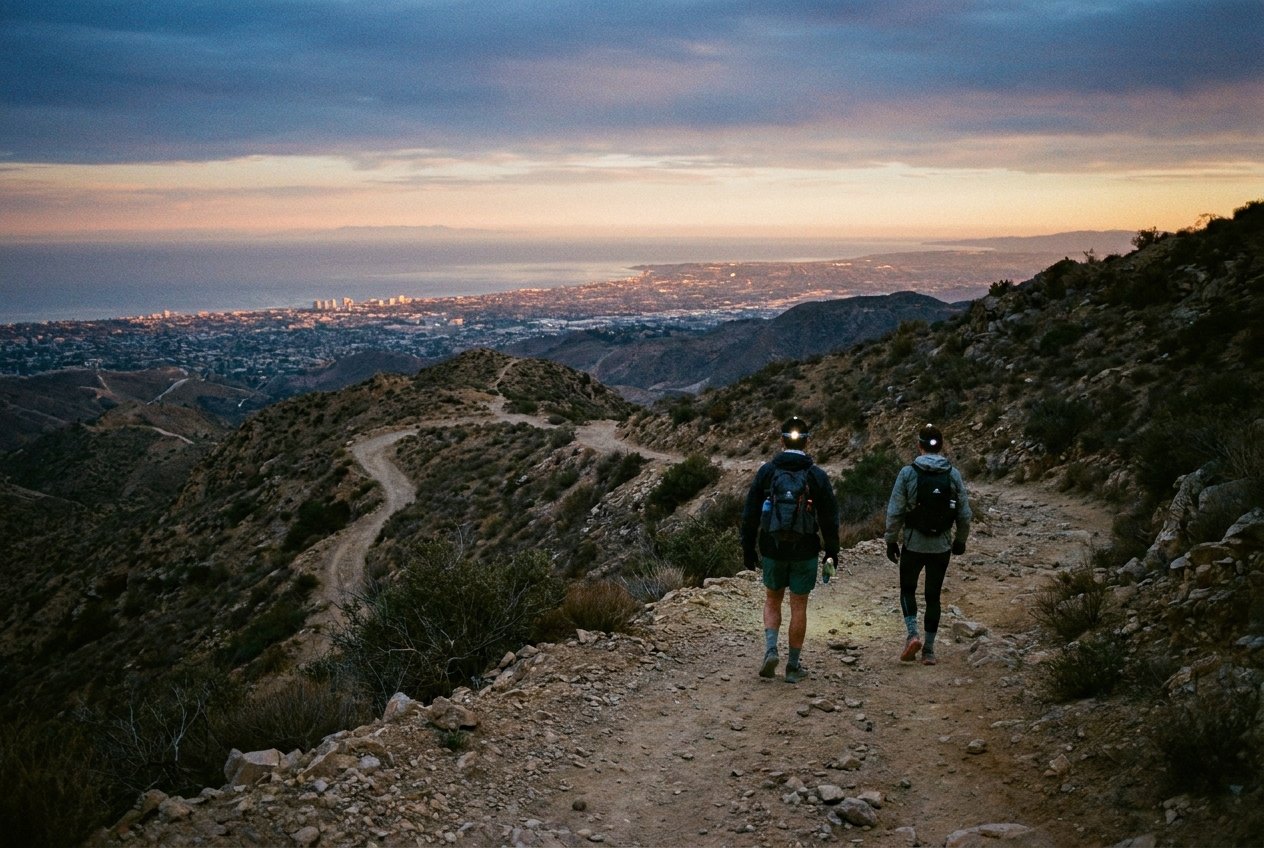
Cowles Mountain rises about 1,593 feet above sea level, which makes it the highest point in the City of San Diego. It sits in Mission Trails Regional Park, on the edge of the San Carlos neighborhood, and the main trail climbs to the top in roughly a mile and a half of steady switchbacks. That makes it short enough to finish before breakfast and steep enough to feel like an achievement.
Teens tend to like it for exactly that reason. It is a real climb with a real summit and a view that stretches from the ocean to the inland mountains. Doing it in the dark, by headlamp, and watching the sun come up from the top turns an ordinary weekend morning into something they will mention for weeks.
Why the dark start is worth it
A sunrise start solves the two biggest problems with this mountain. The first is heat. The trail is almost completely exposed, with low chaparral and coastal sage scrub and almost no shade at all. By late morning, especially from late spring into autumn, the slope bakes, and the climb becomes hard work for anyone.
The second is crowds. Cowles is one of the most popular hikes in the city, and the trailhead parking fills early on weekends. Starting before first light puts you ahead of much of the traffic, both on the road and on the trail.
There is also the start itself. Walking up a dark hill with a beam of light ahead and the city still quiet below feels different from any daytime hike. Teens who groan at the alarm are often the ones leading by the second switchback.
Check sunrise time the night before and aim to leave the trailhead about an hour before it. Teens who move steadily reach the summit in forty minutes to an hour. Also check the park's posted trail hours, because rules on use before sunrise can change.
The climb, one switchback at a time
The main trail starts near the corner of Golfcrest Drive and Navajo Road, beside a small staging area with restrooms. From there it climbs steadily, gaining close to a thousand feet in about a mile and a half. The surface is packed dirt and loose rock with rough steps in places. It is wide and well used, so finding the way is easy, but the footing asks for attention, especially on the way down.
The route zigzags up the southwest face, and each turn opens a wider view. Shortcutting between switchbacks damages the slope and is not allowed, so everyone sticks to the trail, even in the dark.
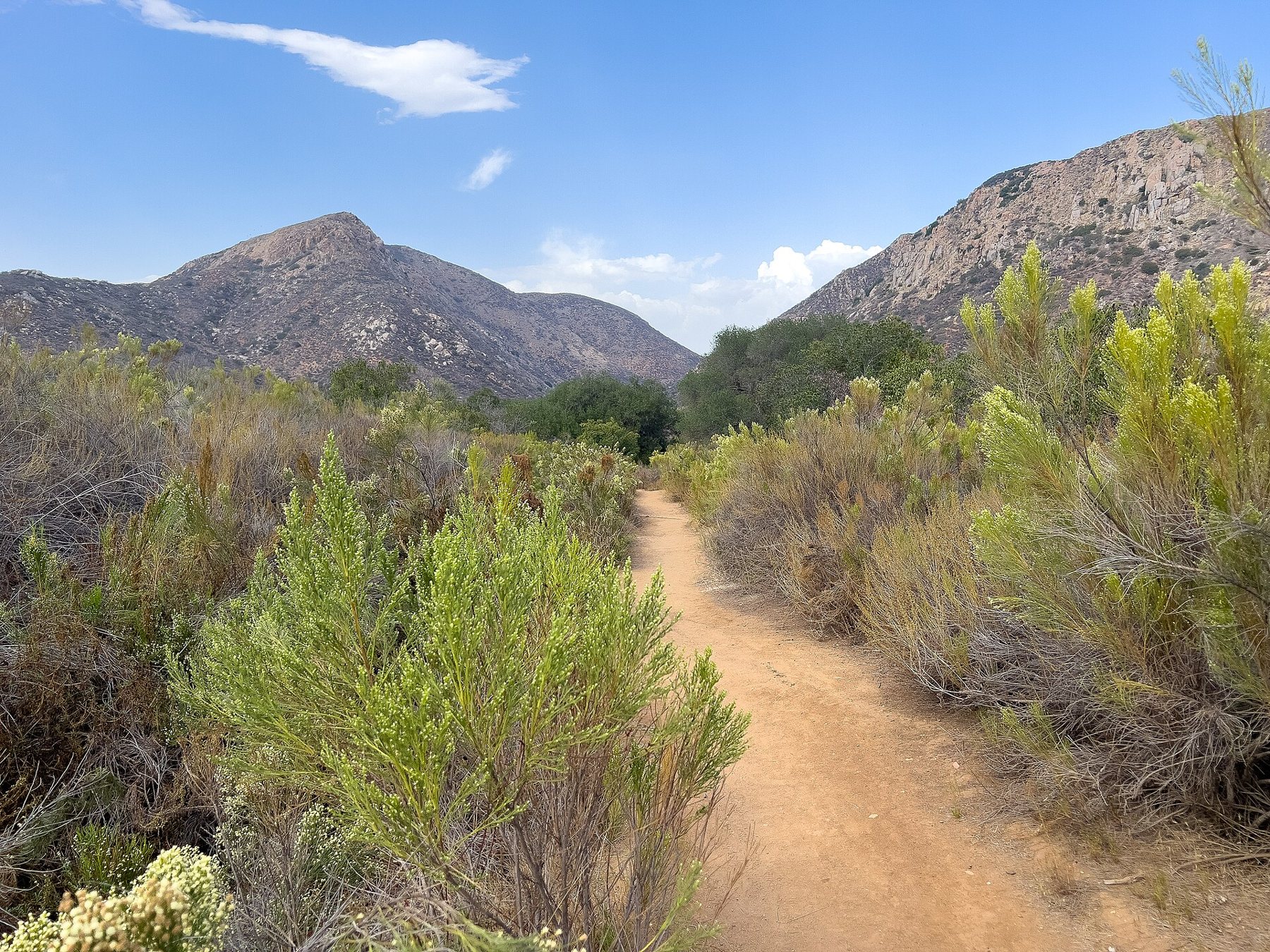
Let teens set the pace and lead, with a parent at the back. That keeps the group together and gives them the feeling of running the show. Short pauses are fine. Long stops in the dark are cold, so keep moving and save the long break for the summit.
Going down takes nearly as long as going up for many hikers. Loose gravel on hard ground rolls underfoot, so short steps, bent knees and attention on each step beat speed. Trekking poles help anyone with sore knees.
12-17Balboa Park on their own termsLight, water and what comes after sunrise
Every hiker needs a headlamp, not a phone light. Phones run down quickly, leave hands busy and give poor light on rough ground. A simple headlamp for each person keeps hands free for balance and lets everyone see their own feet.
- Water: at least one bottle per person, more in warm months. There is no water on the trail.
- Layers: early mornings can be cool, especially in winter, and the summit is often breezy. A light jacket that packs small is enough.
- Shoes: trail shoes or sneakers with real grip. The loose rock on the descent is where slips happen.
- Sun cover: once the sun is up, it is strong even in winter. Hats and sunscreen go in the pack.
- A snack: breakfast at the top is half the fun.
Rattlesnakes live on this mountain, as on most San Diego trails, and are more active in warm weather. Stay on the trail, watch where you put hands and feet, and give any snake plenty of room. In hot spells, even an early start can turn warm on the way down, so drink before you feel thirsty.
Check the forecast for wind and heat the night before. If a heat advisory is in effect, even sunrise may be too warm for a comfortable climb, and a different plan is the smarter call.
What you see from the summit
On a clear morning the whole county seems to spread out below you. The summit is a rocky knob with room for a crowd. On a clear morning the whole county seems to spread out below you. To the west lie the city, Mission Bay and the Pacific. To the south, on the clearest days, you can pick out the hills of Mexico. East are the higher peaks of the inland mountains, often the first to catch the light.
Marine layer mornings are common, especially in late spring and early summer. Sometimes that means a grey summit and no view at all. Other times the cloud lies below you like a white sea with hilltops poking through, which teens tend to find even better than a clear sky. Either way, it is part of the gamble.
Bring the snack out here. A summit breakfast of fruit, a muffin or a sandwich, eaten while the light changes over the city, is the reward that gets teens out of bed next time. Pack out every wrapper and peel.
Give the summit to everyone. Talk quietly, keep music in earbuds, and step aside for photos. Coming down, stay in control on the loose rock and step aside for runners and hikers coming up.
Sharing a busy mountain, and the younger ones
Cowles is a community mountain. Morning regulars, runners, dog walkers and groups all use the same trail. Leashed dogs share it too. Keep to the right, let faster people pass, and teach teens the simple trail rule that hikers going uphill have the right of way.
Parking manners matter too. The trailhead lot is small, and overflow spills onto residential streets. Park legally, keep voices down when you get out of the car before dawn, and leave driveways clear.
Mission Trails is also part of the homeland of the Kumeyaay people, who lived across these hills and valleys long before the city grew around them. The park's visitor center, a short drive away, tells that story along with the natural history of the area.
Cowles is a big step for younger kids. If school-age siblings want a mountain day too, start them on a first real trail at Mission Trails with flatter ground and some shade near water. Teens hungry for a coastal hike next can try the reserve trails at Torrey Pines, and anyone who wants to stay near water instead might prefer a paddle on Mission Bay on a calm morning.