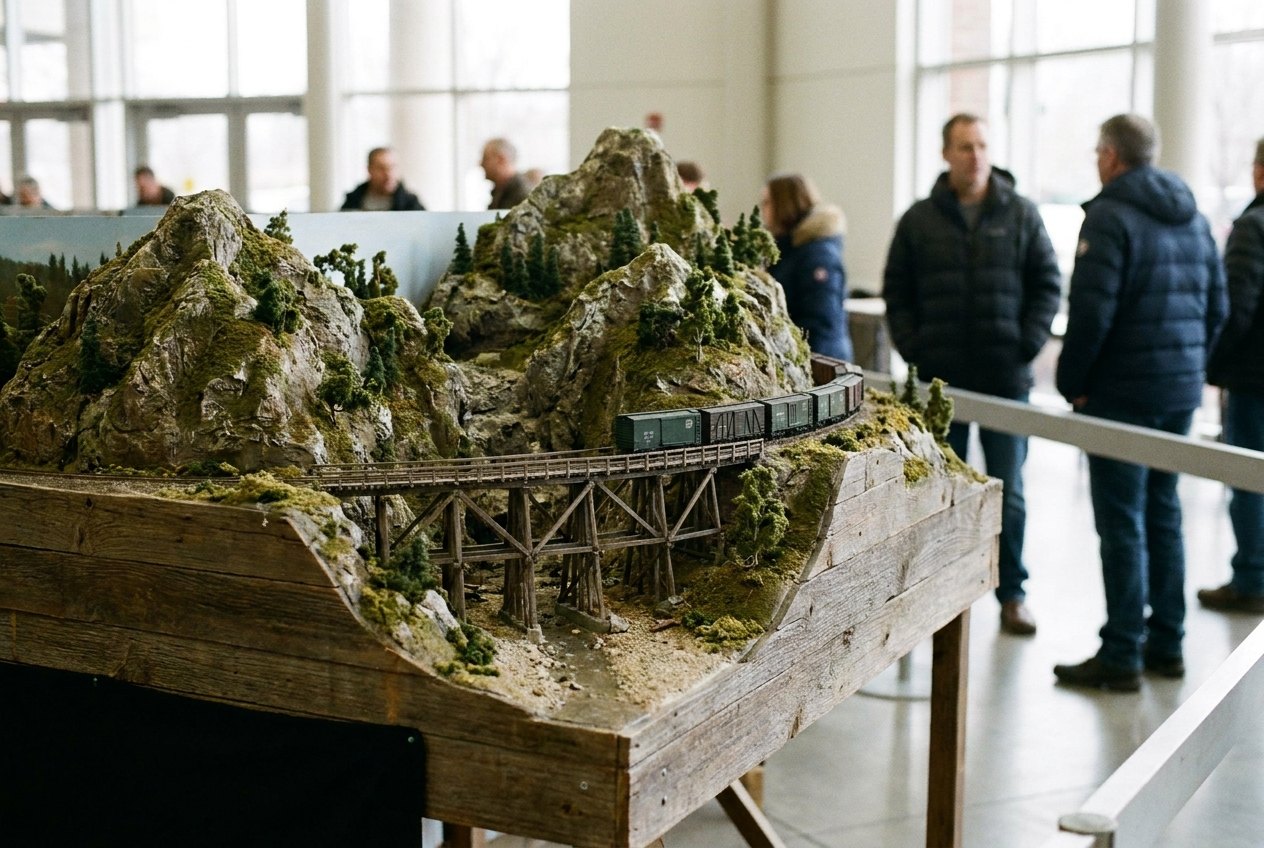
Downstairs in the Casa de Balboa, on El Prado in Balboa Park, a series of long rooms holds some of the most detailed model railroad layouts anywhere. The San Diego Model Railroad Museum is one of the largest indoor model railroad museums in the world, with scenes that recreate real California and Southwest railroads in miniature: mountain passes, desert tracks, bridges, tunnels and small towns.
It is calm, indoors and full of things to look at, which makes it a reliable stop for every age and especially good on a wet or very hot day.
What the layouts show
Each large layout is built and run by a model railroad club, with members who have spent years on the scenery, the buildings and the tracks. The models follow real places and real railroads, including mountain routes where trains loop and climb, and the dramatic line through the desert canyons east of San Diego.
Look closely and the details multiply: tiny people, cars, trees, signs, rivers and rock faces. Older kids and teens often start counting details or trying to follow a single train through a whole layout. Younger kids are happy watching for the next train to come out of a tunnel.
Scale matters too. Different layouts use different model sizes, from tiny trains that would fit in a palm to larger ones you can hear rumbling along the track.
A spotting game keeps kids looking closely. Ask them to find:
- A train crossing a bridge.
- A tunnel with a train going in and coming out.
- A tiny person doing an everyday job.
- A town with a station.
- Water: a river, a lake or a waterfall.
When the operators are running trains, they sometimes answer questions about how the layouts work. Kids with an interest in engineering, electronics or history get a lot out of those short conversations.
The toy train room for little ones
For small children, the toy train area is often the highlight. It is set up with classic toy trains at kid height, and some trains respond to buttons, so even toddlers can make something happen. This area is designed for the youngest visitors, and it can hold their attention for a surprising amount of time.
It is a good place to start with little ones. Give them time there first, then try the bigger layouts, where watching is the main activity.
0-4The San Diego Zoo with a stroller, hills and allQuiet rules for the big rooms
The layouts are delicate, and the museum has a few simple rules worth explaining before you go in:
- Look with eyes only. No touching the layouts or leaning on the edges.
- Keep voices calm, since rooms are close together and the operators are concentrating.
- Walk, do not run, and keep small kids close in the narrower aisles.
- Snacks and drinks wait until after the visit.
Most kids follow the rules easily once they understand that the trains are fragile and that the operators are working.
If a toddler gets restless, step out into the hallway for a break, then come back. Short visits with breaks work better than pushing through.
What each age gets out of it
Toddlers and preschoolers love the motion and the sound: a train rolling into view, a crossing, a horn. Keep them near the toy trains, and lift them for a look at the bigger layouts.
School-age kids enjoy the detail and the hunt. They can follow one train around a whole layout, count cars, and read the short signs that explain which railroad each layout shows.
Teens often get interested in how it all works: the wiring, the scale, the scenery techniques and the years of volunteer work behind each layout. Ask an operator a question if one is free, and let teens lead the conversation.
How long, and when to go
An hour is enough for most families with young kids. Families with older kids or train fans can easily stay for two. Inside, the rooms sit on one level and work well with a stroller, though some areas are tight when busy.
Weekends are busier, and train operations vary by day. Rainy days bring larger crowds, so arriving near opening time helps. Many Balboa Park museums close one weekday, so check the schedule before you go. Tickets cost money, with discounts for some groups, and the museum sometimes takes part in residents' free Tuesdays, which rotate between museums. Check current details before you plan.
The museum makes an easy short visit before or after lunch, so it fits into a half day in the park without wearing everyone out.
Pairing it with the rest of the park
The Casa de Balboa sits right on El Prado, so it pairs easily with other Balboa Park stops. On a dry day, little ones might ride the carousel and the little train after the model trains. On a rainy day, combine it with the science center's hands-on galleries for a full indoor plan, or follow the rest of our rainy-day plan for every age.
Teens who enjoy the details here might also like choosing their own museums on a day built around Balboa Park on their own terms.
Arriving and finding a space
Parking in Balboa Park has changed in recent years, with paid parking in many lots and different rules for residents and visitors. Check current rules before you drive, or consider taking the bus. From the parking areas, the Casa de Balboa is a short walk along El Prado, under the arcades in places, which helps on rainy days.