Tide pools at Cabrillo National Monument
When the tide drops on Point Loma, the rocky shore turns into a row of living pools. Time it right, watch your footing, and leave every creature exactly where you found it.
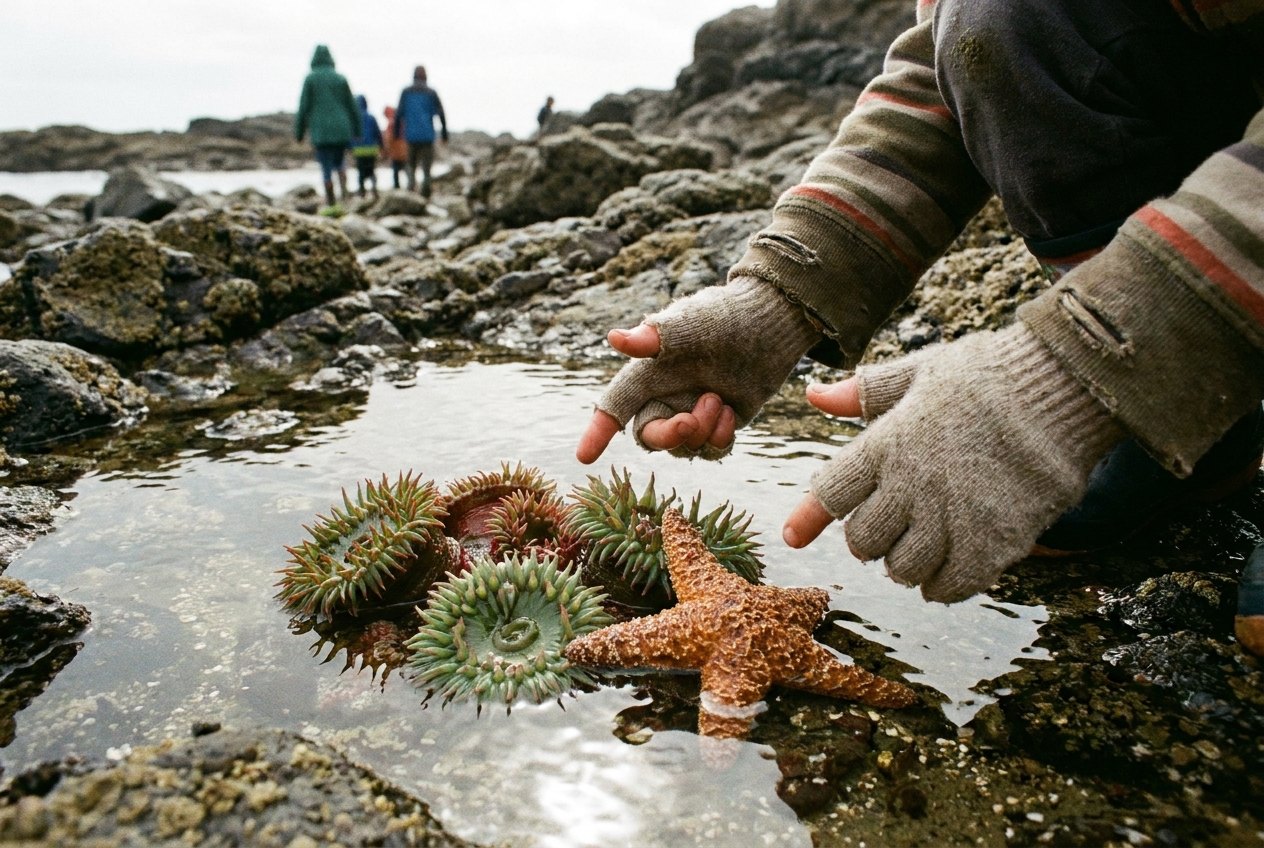
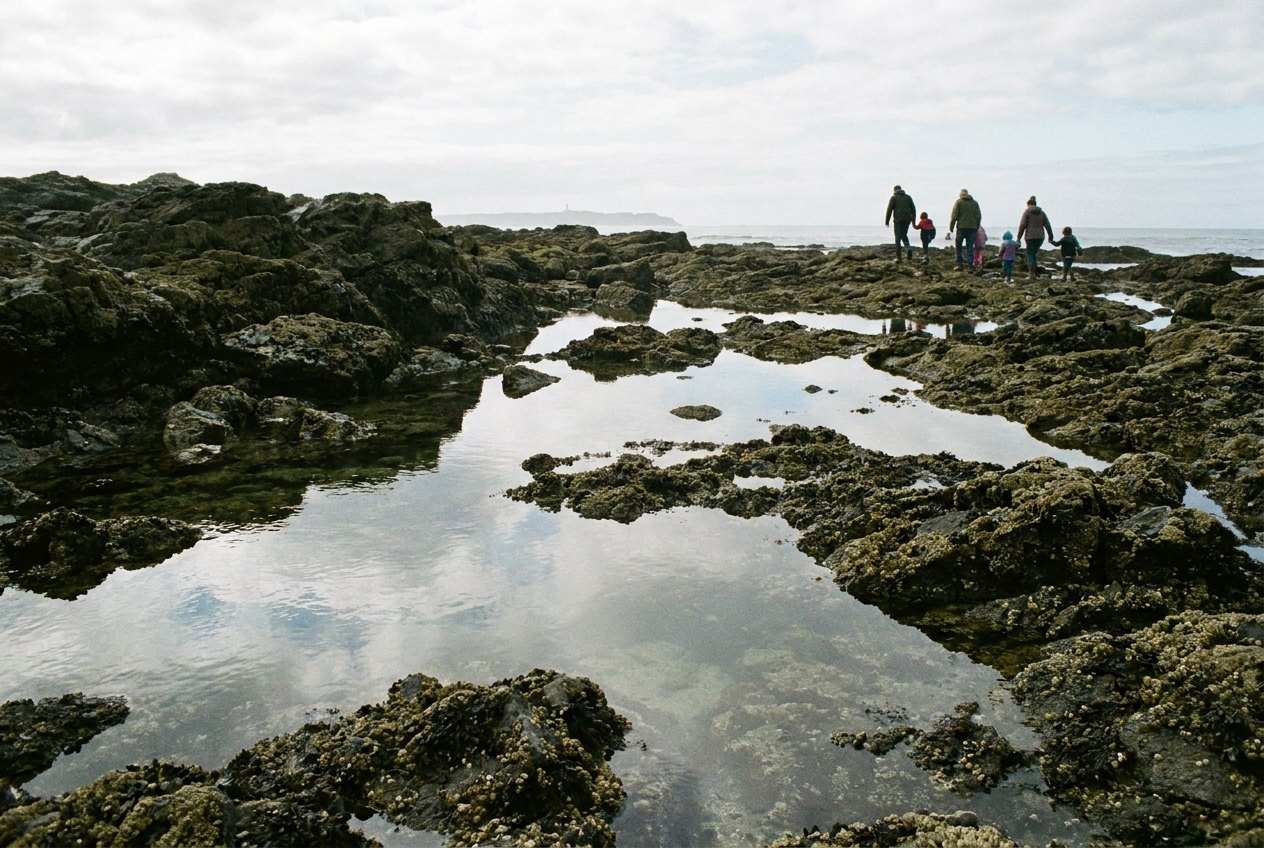
At the southern tip of Point Loma, the land narrows to a high ridge with San Diego Bay on one side and the open Pacific on the other. Cabrillo National Monument covers the top of that ridge, and on the west side of the point, down a winding road, a shelf of rock runs along the water. At high tide it is just a rocky coast with waves slapping at it. At a good low tide it becomes a maze of pools full of sea anemones, hermit crabs, snails, limpets and, with luck, a sea star or an octopus tucked under a ledge.
It suits school-age kids especially well: old enough to walk on uneven rock, young enough to crouch over one small pool for twenty minutes. Teens get just as absorbed once they stop pretending not to be. Toddlers can come too, in a carrier and with a firm hand, but this is a place for watching feet as much as watching animals.
The tide sets the clock
Everything here depends on the water. Tides rise and fall roughly twice a day, and the low ones are not all equal. The best days are the very low tides, the ones that dip below the zero line on a tide chart. Those expose rock that stays underwater most of the month, which is where the anemones, sea hares and bigger crabs live.
In San Diego the lowest daytime tides tend to fall in the afternoons from late autumn through winter, and in the early mornings in late spring and summer. That makes a winter afternoon the easiest fit for most families: no dawn start, cooler weather and softer light. Look up the tide table a week or two ahead and circle the days with the lowest numbers in daylight hours.
- Arrive about an hour before low tide so you can walk out as the water drops.
- Plan to head back to the stairs and path soon after the tide turns. Water comes back faster than kids expect.
- The coastal area can close earlier than the top of the park, and access sometimes changes for safety or restoration work. Check the park's own website before you go.
Rules on the rocks
The tide pools are a protected area, and the rules are simple enough for a five-year-old to repeat back to you. Nothing leaves the shore: no shells, no rocks, no animals, not even an empty crab shell. Animals stay where they are. That means no lifting rocks, no prying a limpet or sea star off its spot and no poking sticks into anemones. If you touch at all, use one gentle wet finger and then move on.
The best way to see more is to slow down and keep still. Crouch beside one pool, stop talking for a minute, and wait. The best way to see more is to slow down and keep still. Snails that looked like pebbles start to move, a hermit crab pokes out, a small fish darts between strands of seaweed. Kids who rush from pool to pool usually see less than kids who pick one and stay.
Footing and waves
The rocks are the real hazard. Green algae and wet weed are as slick as ice, and the shelves are sharp where barnacles grow. Step on bare, dry-looking rock, keep hands free for balance, and teach kids to walk slowly with knees bent. Shoes with real grip matter far more than anything else you pack, and flip-flops are a bad idea.
Keep an eye on the ocean side. Even on calm days, a bigger set of waves can surge across the outer rocks without much warning. Stay back from the outer edge, never turn your back on the water for long, and keep little ones within arm's reach.
5-11A first real trail at Mission TrailsUp top: the old lighthouse and the long view
Most families combine the tide pools with the top of the park, either before or after. The Old Point Loma Lighthouse, first lit in 1855, stands near the highest point. It sat so high that fog and low cloud often hid its light from ships, and a newer lighthouse closer to the water took over its job in 1891. The old building has been restored, and kids can peek into rooms set up to show how a keeper's family lived. The stairs are narrow, so the stroller waits outside.
The visitor center tells the story of Juan Rodríguez Cabrillo, whose expedition sailed into San Diego Bay in 1542, and the statue that faces the bay draws a crowd for photos. The Kumeyaay people lived on and around this point for thousands of years before any ship arrived, and the park's exhibits and rangers talk about that history too. Ask at the desk about the Junior Ranger booklet, which gives school-age kids something to work through.
From the overlooks you can see downtown, Coronado, the bay full of ships and, on clear days, the mountains well inland. In winter, gray whales pass offshore on their migration, and a sharp-eyed kid with patience may spot a spout.
Fees, the road in and parking
The monument charges an entrance fee, usually per vehicle, and national park passes are accepted. If your family has a fourth grader, ask about the federal free pass for fourth graders for that school year. Fees change, so check the park's website for current amounts.
The drive down Point Loma passes military land and Fort Rosecrans National Cemetery. Keep to the road and keep the car quiet and respectful through the cemetery stretch. At the top, parking is near the visitor center. The tide pools have their own smaller parking areas down a separate road on the west side, and on a good low tide those fill early. Weekdays are calmer than weekends.
Pacing it with kids of different ages
For little ones, keep it short: a carrier for the rocky path down, twenty minutes at the pools, a snack, then back up. The paved areas at the top, around the visitor center and lighthouse, work with a stroller, though there are hills. For school-age kids, a full low-tide session plus the lighthouse fills a satisfying half day. Teens might enjoy the coastal stretch on its own and a long look out from the overlooks.
Food options inside the park are limited, so bring water and snacks, and pack layers. Point Loma is often windy and cooler than inland neighborhoods, especially on winter afternoons, and the sun is strong all year even when the air feels cool. Use the restrooms at the visitor center before heading down to the shore.
If the tide pools spark questions about what lived here long ago, the fossil hall in Balboa Park makes a good next outing. Families with older kids who want more coastline can pair this with the trails and beach at Torrey Pines, and a calmer, sandier day for toddlers waits at a bay beach on Mission Bay where there is no surf at all.