A first real trail at Mission Trails
Mission Trails Regional Park has easy loops, a lake, an old stone dam and a visitor center. It is a good place for school-age kids to try their first proper hike.
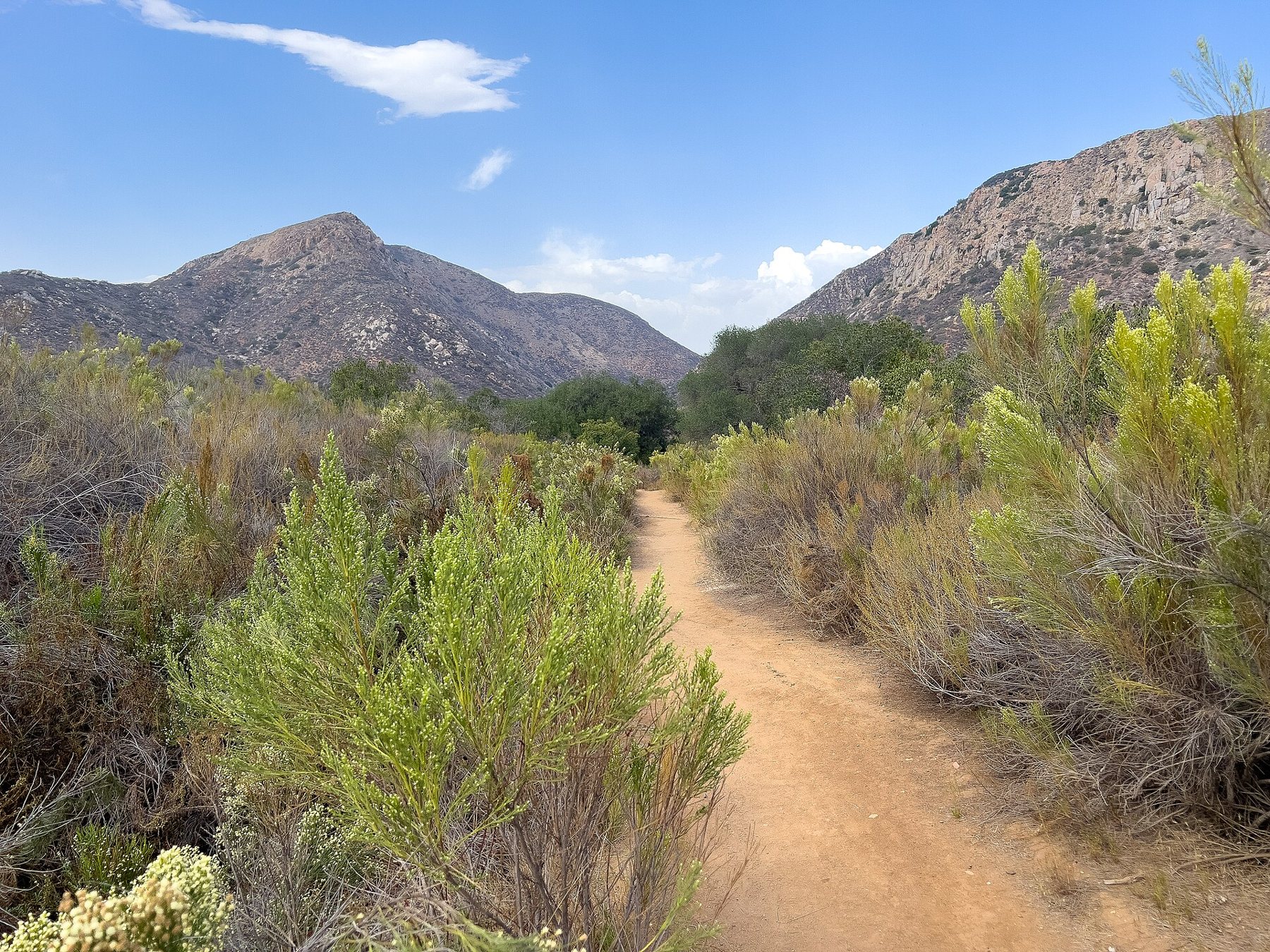
There is a moment in every child's life when a walk becomes a hike. The path gets dusty, the city noise fades, and suddenly there are hills all around. Mission Trails Regional Park, in the northeast of the city of San Diego, is one of the best places to make that happen.
It is a large, wild park with a river, rocky hills, chaparral and oak woodland, and it is close enough to town to fit into a morning. For school-age kids, roughly five to eleven, it offers easy loops with real rewards: a lake with birds, an old stone dam across the river, and a visitor center where the questions get answered.
Why Mission Trails works for a first hike
Mission Trails is one of the largest urban parks in the country, so there are trails for every level, from steep summit climbs to gentle loops on the flat. For a first hike, stick to the valley floor.
- The scenery changes quickly. In a short walk, kids pass through scrub, along the river and under shady trees. Change keeps legs moving.
- There are natural goals. A lake, a dam or a bridge gives children something to walk toward, which beats walking for its own sake.
- Bail-out options exist. Several routes loop back to the parking areas, so you can shorten the day if someone runs out of steam.
The park's own website and the visitor center have maps of the trail system. Pick a route before you start, and tell kids roughly how long it will take.
Three easy goals: the visitor center, the dam and the lake
The visitor center
The visitor center is a good starting point. It has exhibits on the park's plants, animals and history, restrooms, water and staff or volunteers who can help with route ideas. Hours vary, so check before you go. Short loops nearby make an easy first outing on their own.
The Old Mission Dam
The Old Mission Dam is a stone dam across the San Diego River, built in the early 1800s to supply water to Mission San Diego de Alcalá downstream. Kumeyaay people did much of the labor under the mission system. Today, the dam is a historic landmark, and kids are usually surprised that something so old still stands. A paved road links the area with the visitor center side of the park, which makes it possible with a stroller for part of the way.
Kumeyaay Lake
Kumeyaay Lake is a small lake near the campground area, with a short, mostly flat loop around it. It is home to ducks, coots and other water birds, and the reeds along the edges are worth watching quietly. For younger kids, this loop alone can be a whole outing.
Kumeyaay heritage, told plainly
The Kumeyaay people are the first people of the San Diego region, and they have lived along this river valley for thousands of years. They are not only part of the past: Kumeyaay communities and bands remain in the region today.
In the park, you may see smooth, rounded hollows worn into granite boulders near the river. These were used to grind acorns and seeds into flour, a sign of daily life here long before the mission arrived. Ask kids to look, but not to sit in, scrape or pry at them. They are part of a living heritage and deserve care.
They are not only part of the past: Kumeyaay communities and bands remain in the region today.
The lake's name honors the Kumeyaay. Talking about who lived here first, and who still does, is one of the most useful things a first hike can teach.
Sun, water bottles and snakes
Mission Trails is inland and much hotter than the coast. On a summer afternoon, the trails can be dangerously hot, with little shade on many stretches. This is the part to take seriously.
- Go early. Start in the morning and finish by late morning on warm days. Cooler months are the best season for kids.
- Carry more water than you think. Each person needs their own bottle, and grown-ups should carry extra. Do not count on finding water along the trail.
- Cover up. Hats, sunscreen and light long sleeves help. Even the winter sun here burns.
- Watch for rattlesnakes. They live in the park and are most active in warmer months. Stay on the trail, keep kids from reaching into rocks or bushes, and give any snake plenty of room. Teach children to stop, back away and tell a grown-up.
- Know the plants. Poison oak grows in some shady areas near the river. Teach kids to stay on the path and not to touch unfamiliar plants.
Mountain lions and other wildlife live in the park too, though sightings are rare. Keep small children close and in sight.
A sample morning, start to finish
For a first outing with kids around six to nine, a simple shape works well:
- Arrive early. Park at the visitor center, use the restrooms and fill every bottle.
- Look inside first. Ten minutes with the exhibits gives kids names for the plants and animals they are about to see.
- Walk to a goal. Pick one: the river and the dam, or the loop around Kumeyaay Lake. Do not try to do everything in one day.
- Snack at the turnaround. Sit in whatever shade you can find, drink water and talk about what everyone has spotted so far.
- Head back before it heats up. Aim to be at the car before the late-morning sun is overhead.
Afterwards, ask kids to draw a map of where they walked. It fixes the trail in their heads and makes the next visit feel like returning to a place they know.
Making it a good first trail
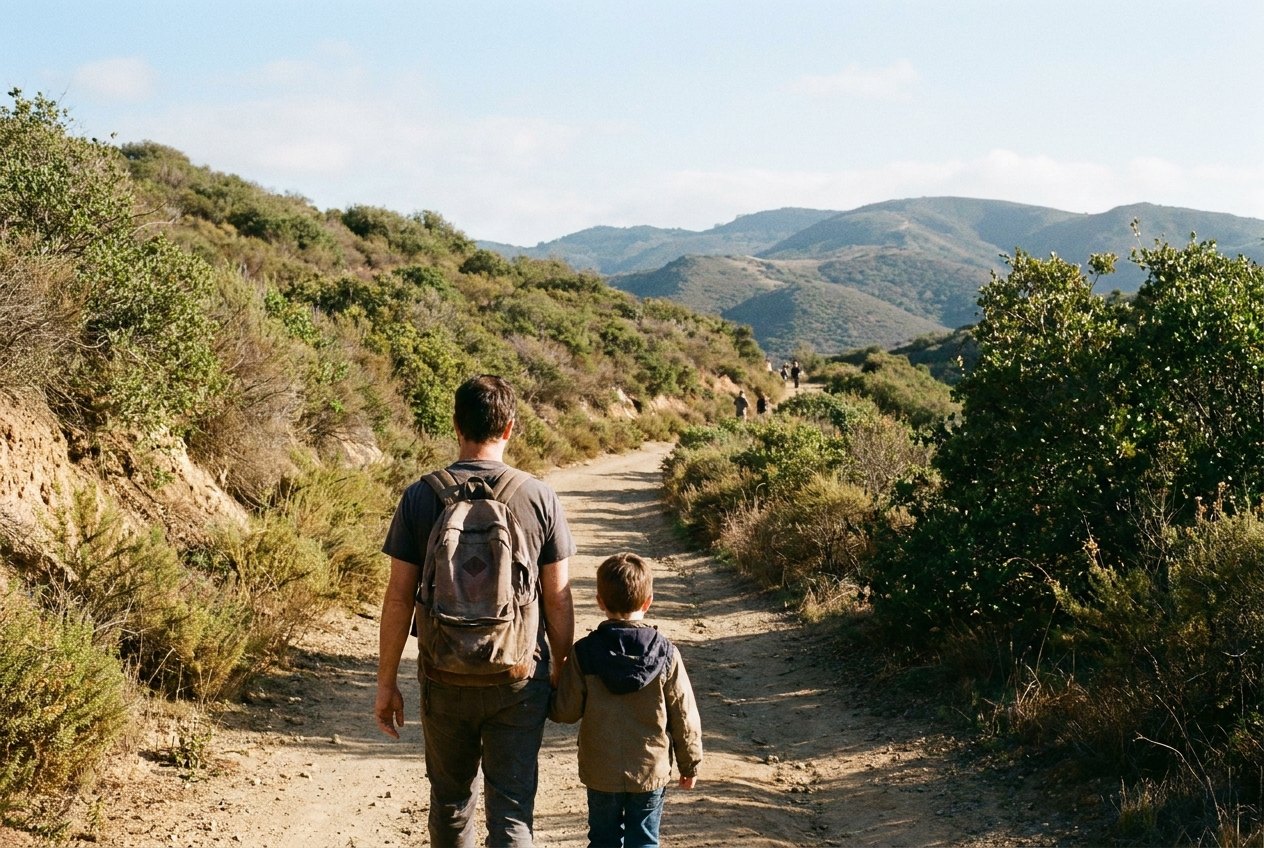
Kids enjoy hiking more when they feel in charge. Let them carry a small pack with their own water. Give them a job: count bridges, spot birds at the lake, find the dam. Stop often for snacks. A first trail should end with a child asking when they can come back, not with someone being carried to the car.
Wear sturdy closed-toe shoes. The trails are dusty and rocky in places, and sandals lead to stubbed toes and complaints. A light first-aid kit with bandages and wipes covers most small mishaps.
Strollers work on the paved road and some flat, wide paths, but not on narrow dirt trails. Use a carrier for toddlers who tag along.
Older kids who catch the hiking bug have plenty to look forward to. Teens can take on the steep switchbacks of Cowles Mountain at sunrise, and the coastal trails of Torrey Pines make a cooler change of scene. For a gentler day with history built in, history you can touch in Old Town tells more of the San Diego story the dam began.