Balboa Park is where many San Diego kids spend their early years: the carousel, the little train, the fountain, the zoo next door. By thirteen or fourteen, a lot of them assume they have done it. They have not. The park holds more than a dozen museums and gardens along a single walkable spine, and most teens have only seen the parts that were chosen for them.
The trick is to hand over the choosing. Give teens the map and a budget, ask them to pick two places, and build the day around their picks. You come along, but as company rather than as tour guide.
Two picks, no more
Two museums is the right number. One feels thin, three becomes a slog, and by the third building everyone is reading the same panel twice. Two museums plus a long walk and a proper lunch break makes a full, relaxed day.
Some of the options teens tend to like:
- San Diego Museum of Art, on the Plaza de Panama, with European, American and Asian collections and changing exhibitions.
- The Timken Museum of Art, small, next door, and known for free entry, which makes it an easy add-on.
- Mingei International Museum, focused on folk art, craft and design, often a surprise hit with teens who like making things.
- The photography museum in the Casa de Balboa, with changing shows that suit teens who live with a phone camera in hand.
- Museum of Us, the anthropology museum in the California Building under the tall tower, with exhibits that ask real questions about culture and identity.
- San Diego Air and Space Museum, in the round building at the south end, for anyone into planes, rockets or engineering.
Science-minded teens may still want the Fleet Science Center or the natural history museum, and that is fine. They will see those places very differently at fifteen than they did at seven.
A useful habit: before the day, each teen writes down one thing they want to see in each museum. A specific painting, a particular aircraft, a single gallery. It gives the visit a goal and keeps it from turning into an aimless walk past glass cases. If they find something better on the way, so much the better.
El Prado as the spine
El Prado is the long, mostly car-free promenade that runs east from the Cabrillo Bridge through the heart of the park. Most of the ornate buildings along it date from the Panama-California Exposition of 1915 and 1916, in a Spanish Colonial Revival style that rewards looking up: carved doorways, tiled domes, arcades and courtyards.
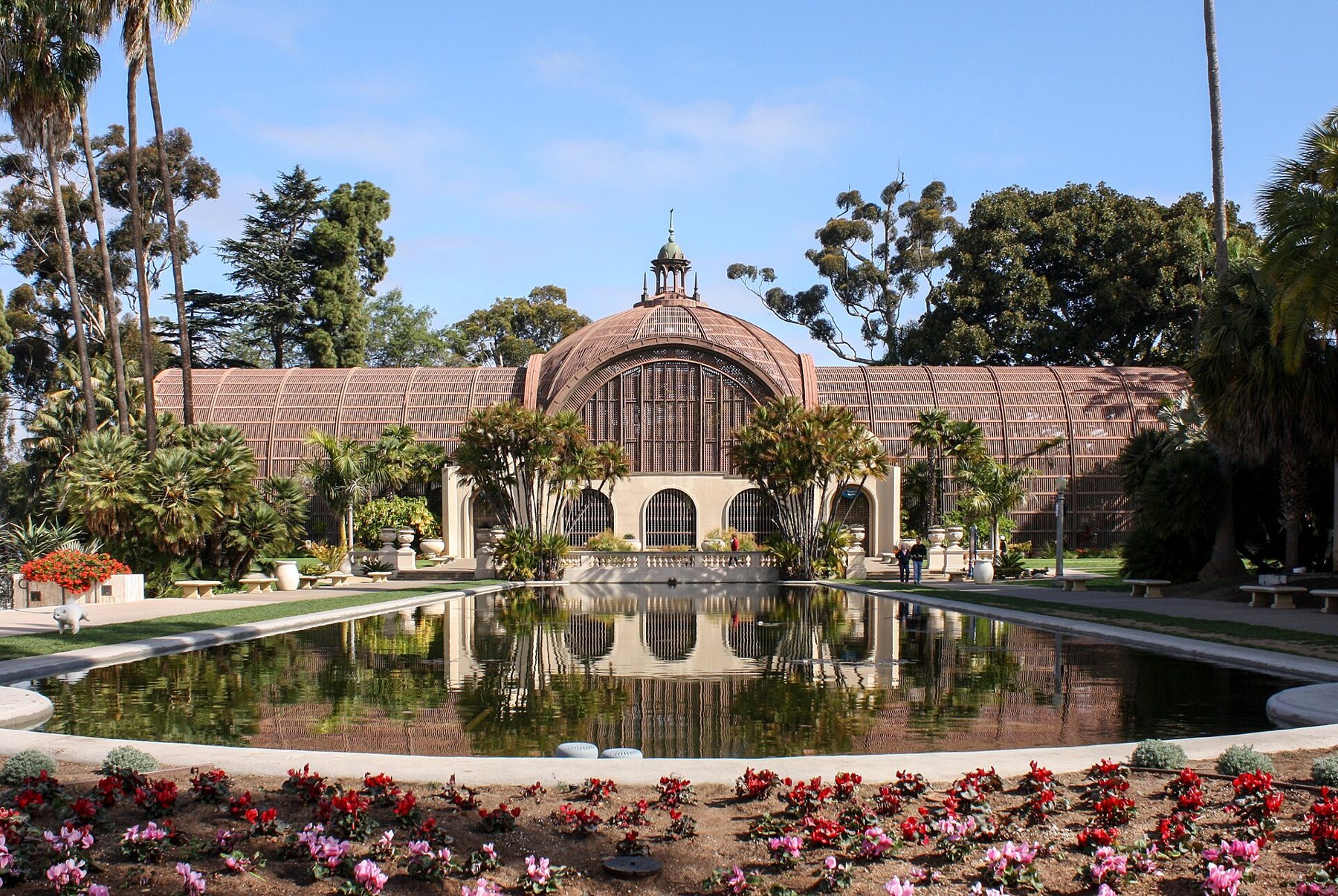
The Botanical Building, with its curved wooden lath frame and the long lily pond in front, is the most photographed spot in the park and free to walk through when it is open. Inside it is shady and humid, full of ferns, palms and orchids. Teens with a camera will find better angles here than almost anywhere else in the city.
Walking the full length, from the bridge to the fountain and back, takes less than half an hour at an easy pace, and longer with stops for photos and the musicians who often play along the Prado.
5-11Dinosaurs, sea monsters and the ground under San DiegoThe California Tower rises over the west end of the Prado, and guided climbs are sometimes offered for a fee, with age rules. Further along, the Plaza de Panama and the Bea Evenson Fountain make easy landmarks. To the south, the outdoor Spreckels Organ Pavilion has a long tradition of free organ concerts, often on Sunday afternoons. Check the schedule, because a live pipe organ outdoors is one of those things teens did not know they wanted to hear.
Independence with a plan
This is the part of the day that matters most. The park is busy, well used and full of people, which makes it a good place for teens to practice getting around on their own while you are within a few minutes' walk.
- Set one meeting point that cannot be misread. The lily pond in front of the Botanical Building and the Bea Evenson Fountain both work.
- Set a time and a backup time. If phones die or signal drops, everyone knows to come to the meeting point at the backup time.
- Charge every phone before you leave home, and carry one small battery pack between you.
- Agree the edges. Stay on El Prado and the main plazas, keep out of the canyons, and stay together after dark.
- Younger teens go in pairs. Older teens with a track record can split off alone for an hour.
Agree too on what happens if something goes wrong: a lost phone, a closed museum, a friend who wants to stay longer. Talking it through at breakfast takes five minutes and saves a lot of anxious texting later.
Planning a day is a real skill, and a day like this is a low-stakes place to practice it. Teens can do the planning: read each museum's site, check what is open that day, work out a rough order and a lunch break. Handing them a small budget for snacks or a museum ticket helps too. Planning a day is a real skill, and a day like this is a low-stakes place to practice it. Meanwhile you get to pick your own museum, sit in a garden, or read on a bench by the fountain.
Tickets, free days and parking
Entry varies a lot from place to place. Some spaces are free, including the Botanical Building and the grounds themselves, and the Timken is known for free admission. Most museums charge, with lower prices for students and young people; bring a student ID. Multi-museum passes are available and can make sense if your teen picks pricier places.
Food is easy to sort. Plenty of families bring a picnic and eat on the lawns near the Plaza de Panama or in the shade off the Prado, which also leaves more of the budget for museum tickets.
Residents of the city and county of San Diego can use rotating free Tuesdays, when a small group of museums offers free general admission to residents with ID. Which museums take part changes each week, so check the current calendar before you plan around it. Many museums close on one weekday, often Monday.
Parking rules in Balboa Park have changed in recent years, with paid parking in many lots and different rates for residents and visitors. Check current rules before you drive. Buses run along Park Boulevard on the east side of the park, which is a good option if your teen wants to try planning the trip by transit too.
Bringing the rest of the family
If younger siblings come along, the day can split in two. A parent can take small kids to the carousel and the little train while teens do their museums, then everyone meets for lunch. Rainy-day fans of every age like the model railroad museum downstairs in the Casa de Balboa, and the zoo next door is a separate, full day on its own. Teens who loved it at seven might even enjoy a second look at the science center's hands-on galleries as a lighter third stop on a slow afternoon.